Audi
Reimagining the In-Car Digital Experience
Designing a unified cockpit interface that balances driver focus with premium brand expression, from instrument cluster to infotainment.
HMI DesignDesign SystemAutomotive UX
ORNIKAR
Transforming Ornikar's booking flow into a structured planning system that helps students stay consistent, reduce drop-off, and reach their driving goal faster.
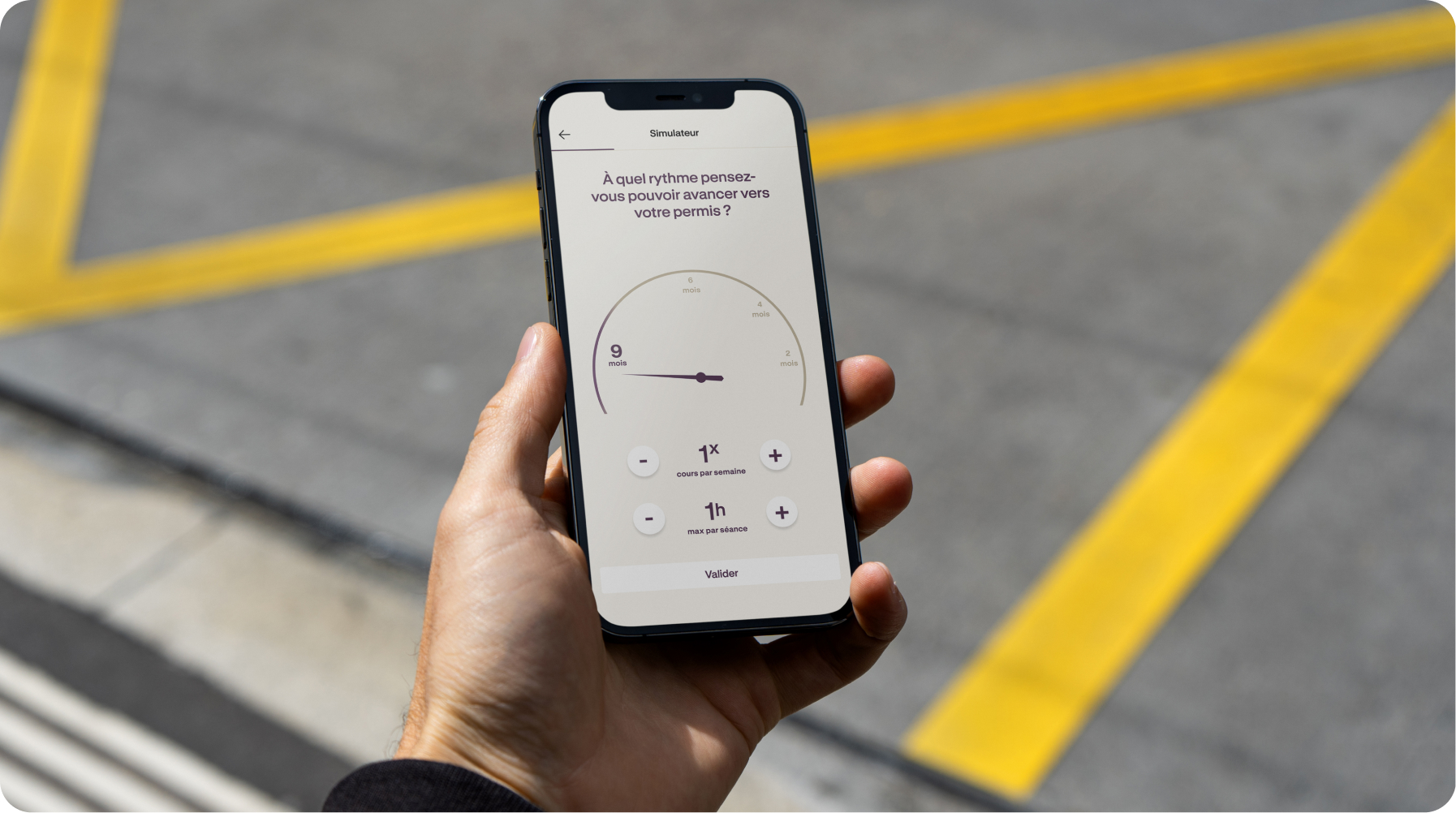
Ornikar has simplified access to driving lessons through a fully digital experience. However, this flexibility leads to reactive behaviors, with little anticipation or long-term planning.
The challenge: increasing lesson consistency and anticipation by turning booking into a system that helps students plan ahead from the very start.
In collaboration with Ornikar

Coraline Colasse
Product Designer — Ornikar

Juliette Roullier
Product Designer — Ornikar
Learning to drive requires consistency, yet the current experience encourages reactive and fragmented behaviors.
No clear plan
Lessons are booked one by one, without long-term visibility.
50% of students plan less than 2 weeks ahead
Consistency is hard to maintain
Irregular practice breaks momentum and slows progress.
40% of students haven't driven in over 30 days
Flexibility creates friction
Freedom without guidance leads to poor planning and drop-off.
40% inactive for 30+ days
We conducted 4 user interviews to understand how learners plan their driving journey, manage their availability, and interact with instructors.
Planning requires projection
Learners need visibility on their training to stay engaged and move toward a clear goal.
“I can't stay motivated alone; I need follow-ups and deadlines.”
Morgane
Learning is goal-driven
Learners set personal deadlines and need a plan that fits their timeline.
“I was on maternity leave… I saw it as my project during that time.”
Justyna
Continuity over instructor
Learners prioritize maintaining their rhythm, even if it means changing instructors.
“I'd rather take another instructor than wait too long between lessons.”
Camille
While users try to plan ahead, the current experience lacks structure to support consistent learning and clear decision-making.
Design opportunity: help learners define a clear plan and build a consistent learning rhythm from the very first interactions.
We translated these learnings into a structured onboarding approach designed to turn fragmented booking into a guided planning experience
What we analyzed
This allowed us to
Problem reframed
How can we turn Ornikar into a roadmap companion that structures the student's daily routine to ensure they succeed on time?
We designed an onboarding experience that helps learners define their plan, understand their constraints, and commit to a consistent schedule.
Feature 01
Define your driving plan
Help learners define a realistic and personalized driving plan based on their goals, availability, and location.
Feature 02
Build and follow a structured schedule
Turn user inputs into a dynamic schedule that learners can review, adjust, and follow over time.
We tested the onboarding experience to evaluate usability, clarity, and users' ability to plan and commit to their driving schedule.
3/3 users
Strong projection through simulation
"It makes it more concrete... you can actually see how long it might take." — Franck
3/3 users
Structured planning encourages commitment
"Seeing everything planned like that makes me want to stick to it." — Camille
2/3 users
Confusion in calendar readability
"I'm not sure what the grey vs purple means here" — Morgane
3/3 users
Weekly vs monthly view ambiguity
"Are these my availabilities or the actual lessons?" — Franck
Three key learnings emerged from user testing, guiding the next iteration of the onboarding experience.
Learning n°01
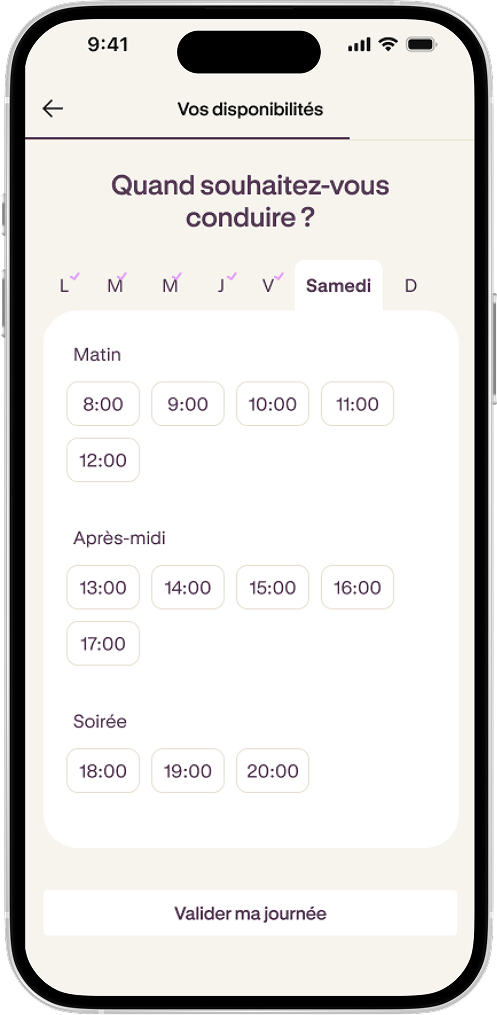
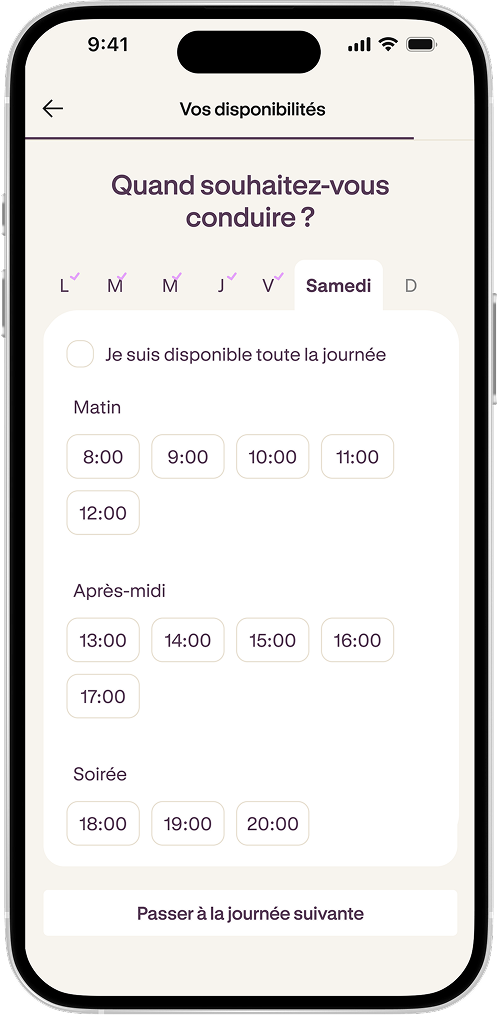
Selecting multiple time slots felt repetitive. 2/3 users wanted a faster way to select full-day availability.
Reducing interaction cost improves usability. → Added a "Select all day" option and clarified the CTA.
Prototype 01
Prototype 02
Learning n°02
Users needed clearer understanding of how their inputs shaped the generated schedule. 3/3 users expected a recap before confirmation.
Planning transparency builds confidence. → Added a recap screen summarizing key inputs before generating the schedule.
Prototype 02
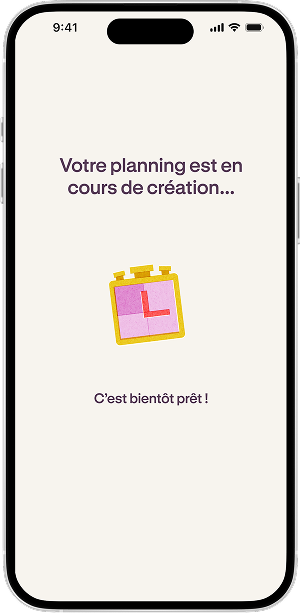
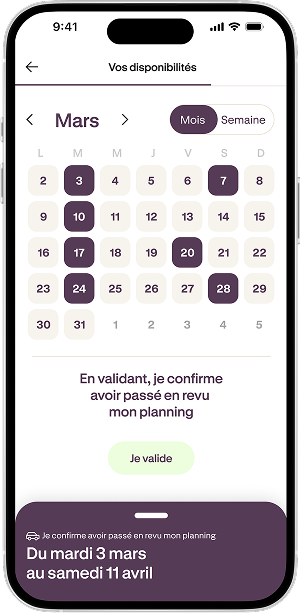
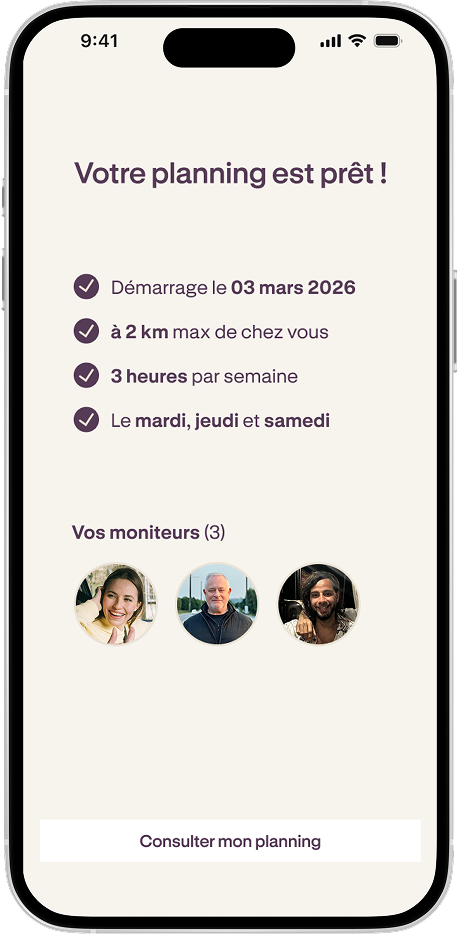
Learning n°03
Users struggled to distinguish their availability from the instructor's. 3/3 users found the schedule confusing.
Visibility drives clarity. → Added instructor indicators to highlight bookable slots.
Prototype 01
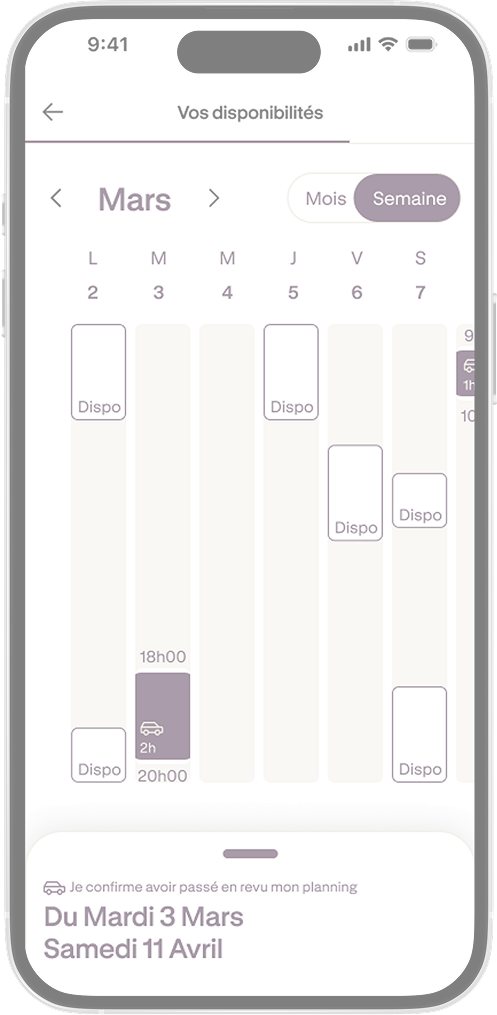
Prototype 02
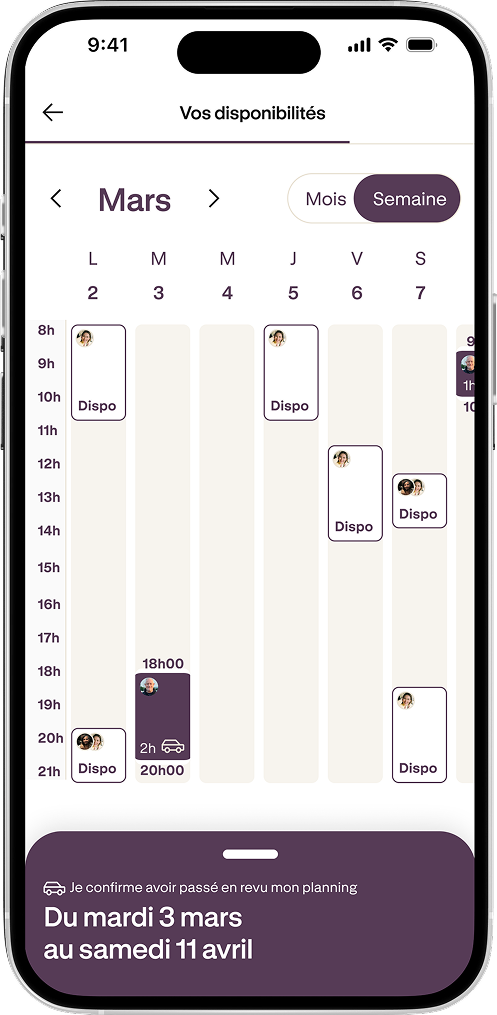
Based on user feedback, this iteration strengthens planning clarity, guidance, and user control throughout the onboarding. Discover the refined experience.
The final concept was presented to the Ornikar team, synthesizing research, iterations, and a clear product direction.
The approach was well received and considered highly relevant to user needs. As Ornikar is currently rethinking its booking system, the team particularly valued the idea of leveraging familiar driving school patterns to bring more structure and clarity to the online experience.
Future work would focus on validating the real impact of this approach and extending the system beyond onboarding.
Measure real behavioral impact
Evaluate how the onboarding affects lesson frequency, planning anticipation, and inactivity over time.
Evolve into an adaptive planning system
Adjust schedules dynamically based on user progress and constraints.
Strengthen learner & instructor coordination
Enable shared planning and better communication between both sides.
Support long-term consistency
Introduce tools to help learners stay engaged throughout their journey.