Structuring musical
identity from
day one

Deezer

Redesigning Deezer's onboarding to help new users feel instantly at home by capturing their musical identity faster, accelerating activation and reducing early churn.

Product DesignMusic Streaming B2C
Deezer onboarding mobile interface mockup
Role
Product Designer
Timeline
2 weeks
Team
3 people
Context
Case study

Deezer, one of Europe's leading music streaming platforms, serves millions of users worldwide.

As part of a two-week sprint, Deezer product designers Mael and Victor briefed us on a real challenge: the onboarding steps. The goal was not to redesign screens, but to rethink how new users shape their musical identity from the very first interaction, and how onboarding could accelerate activation, increase early engagement, and reduce post-sign-up drop-off. Within two weeks, we framed the problem, defined a strategic direction, and delivered a validated prototype.

The challenge: reducing early churn by helping users feel instantly understood when joining the platform.

In collaboration with Deezer

Mael Gajcanin avatar

Mael Gajcanin

Product Designer — Deezer

Victor Cartier avatar

Victor Cartier

Product Designer — Deezer

01

The Problem

Onboarding at Deezer must do more than collect preferences, it must help users feel instantly understood.

A fear of starting over

Switching platforms feels like losing years of music history.

Musical identity is complex

Selecting a few artists doesn't reflect how people truly experience music.

Every minute counts

Too much effort causes drop-off. Too little prevents meaningful personalization.

02

User Research

6 qualitative interviews with users who have recently switched streaming platforms. Understanding how users experience switching platforms and what truly defines their musical identity.

Identity is contextual, not artist-based

Users define their taste through moments, moods, and situations, not through a list of artists.

When I'm feeling low, there are certain songs. When I'm really happy, there are different ones.

Sihem

Library transfer reduces friction

Selecting a few artists doesn't reflect how people truly experience music.

I would have done it right away, but it wasn't suggested, so I didn't look for it.

Clément

Musical DNA lives in saved tracks

The 'Liked Songs' playlist acts as a personal archive. Users listen by tracks more than by artists.

I mostly listen to my liked songs playlist, it's my default way of listening.

Nine

Early research revealed a core tension: users want to feel instantly understood, but their identity is too rich to be captured through simplified inputs.

Design opportunity: an onboarding that leverages existing history to generate immediate recognition without increasing cognitive effort

03

From Research to Concept

We translated user insights into a strategic onboarding direction focused on reducing emotional friction and accelerating identity recognition

What we analyzed

  • Identity captures listening patterns (artists vs contexts)
  • Platform transition (library import)
  • Track-based behaviors (likes, saves, playlists)
  • Emotional reassurance signals
  • Friction during first-session setup
  • Activation vs personalization balance

This allowed us to cross-reference

  • What users need to feel recognized
  • Where current onboarding doesn't fully reflect musical identity
  • Where transition friction happens

Problem reframed

How might we quickly capture a user's musical DNA to translate their historical collection into an immediate identity?

04

Onboarding Experience

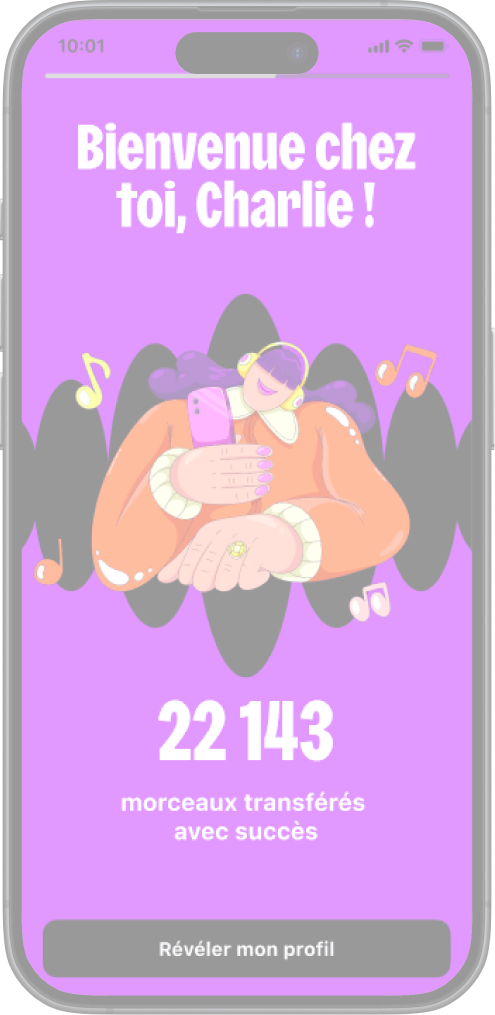
Creating a seamless first experience built around users' musical identity, reinforcing recognition from the first interaction to increase perceived value and reduce early drop-off.

Feature 01

Restore Musical Continuity

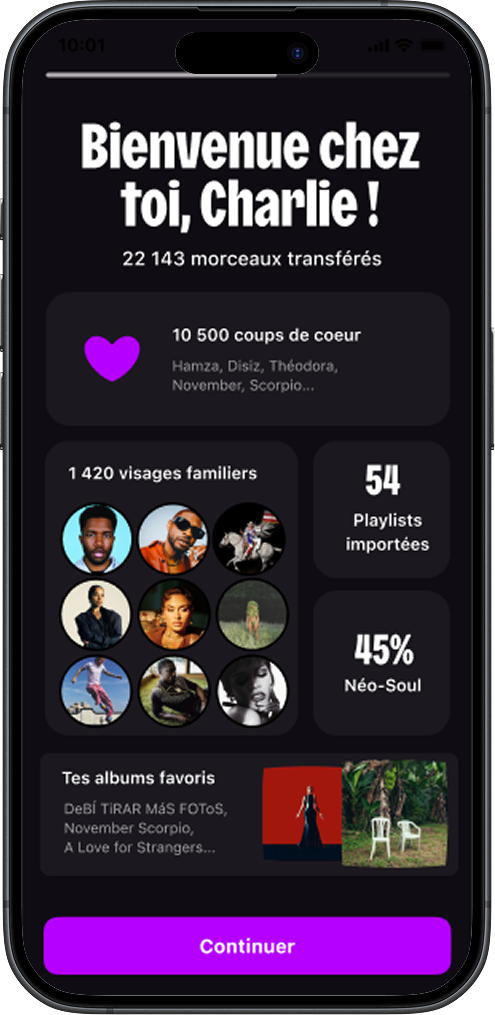
To reduce the feeling of starting from scratch, users can import their playlists and listening history in a few clicks.

  • Increase onboarding completion
  • Increase premium conversion

Feature 02

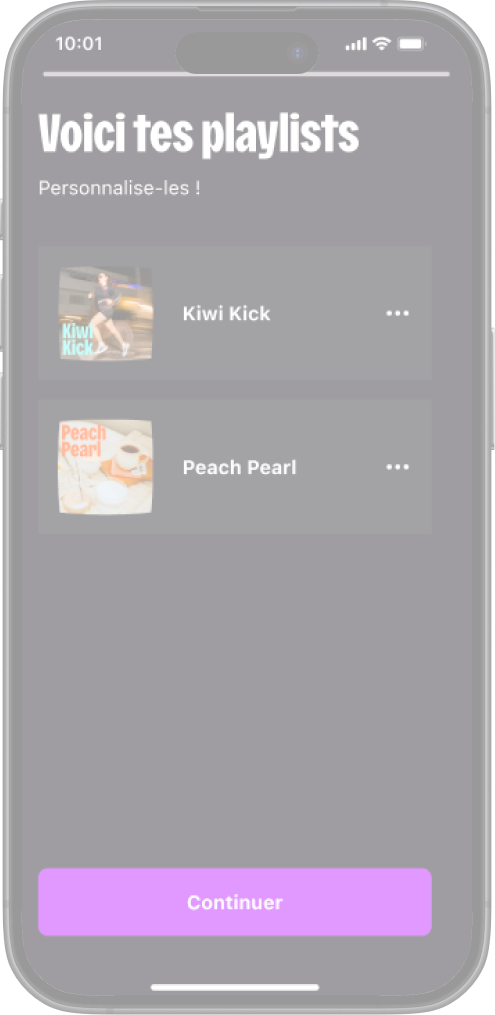
Generate contextual playlists

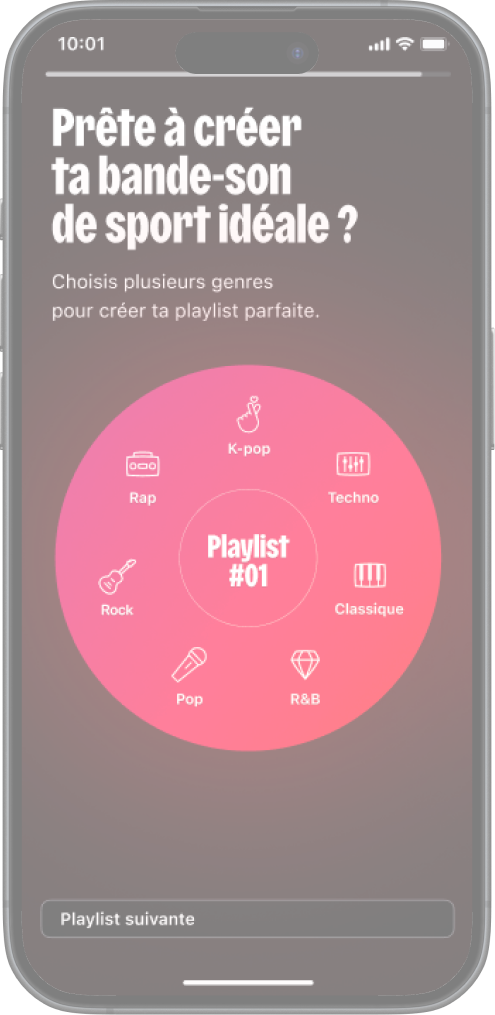
After importing their library, Deezer generates playlists tailored to moods, activities, and moments, recreating the "soundtrack of their life."

  • Reduce time-to-first-play
  • Reduce early churn
05

User testing

User testing focused on assessing the onboarding's ability to drive activation by making the experience feel personal, intuitive, and trustworthy.

Objective 01

Smooth library import & continuity with listening history

Objective 02

Immediate sense of recognition

Objective 03

Relevance of context-based playlists

Objective 04

Reassuring & positive experience

Validated features

User testing validated both usability and desirability: the onboarding felt smooth, library import was intuitive, and context-based playlists generated genuine interest.

5/5 users

found the onboarding smooth and fast

5/5 users

spontaneously imported their music library

5/5 users

enjoyed the playful description of their musical profile

5/5 users

showed real interest in context-based playlists

06

Learning & iterations

Three key learnings emerged from user testing, guiding the next iteration of the onboarding experience.

Learning n°01

Users didn't recognize themselves: 3/5 expected familiar content.

Recognition drives ownership. → Surface familiar content from the imported library

Prototype 01

Prototype 02

Learning n°02

Users found the genre selection unintuitive: 4/5 found the wheel too complex and not personalized based on their imported library.

Personalization must be explicit and guided. → Pre-select and adapt genres based on imported data.

Prototype 01

Prototype 02

Learning n°03

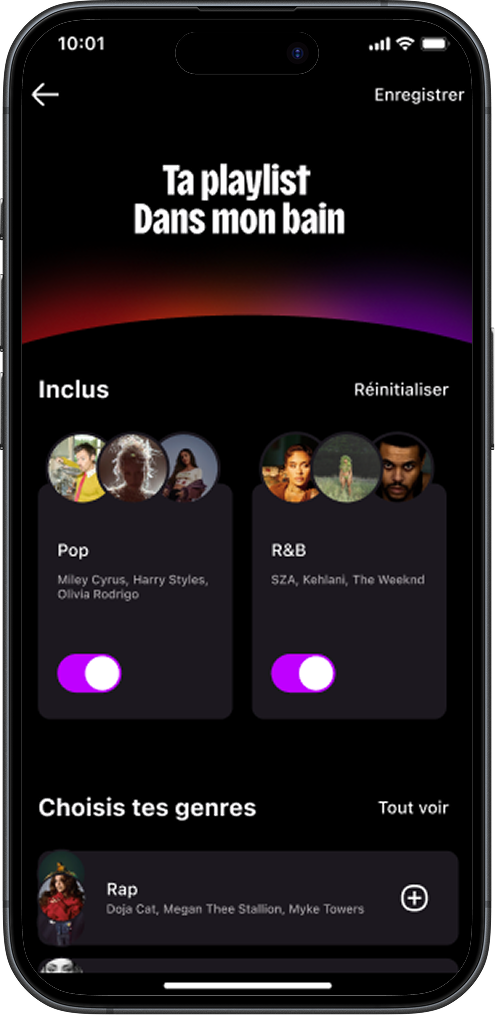
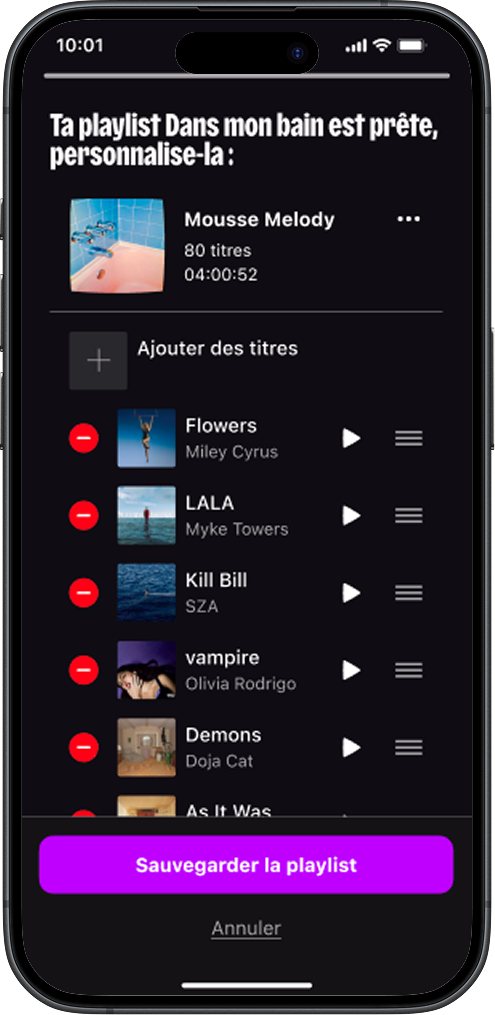
Users needed more control before validating playlists: 5/5 wanted to preview and edit before confirmation.

Control increases engagement. → Allow preview and editing before saving.

Prototype 01

Prototype 02

07

Prototype V2

Informed by user feedback, this refined version strengthens recognition, guidance, and user control. Click to see how the experience evolved.

08

Final Presentation

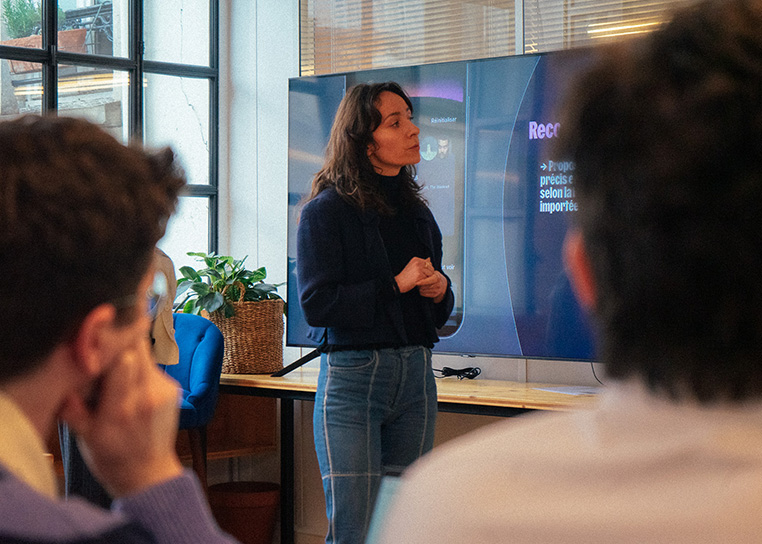
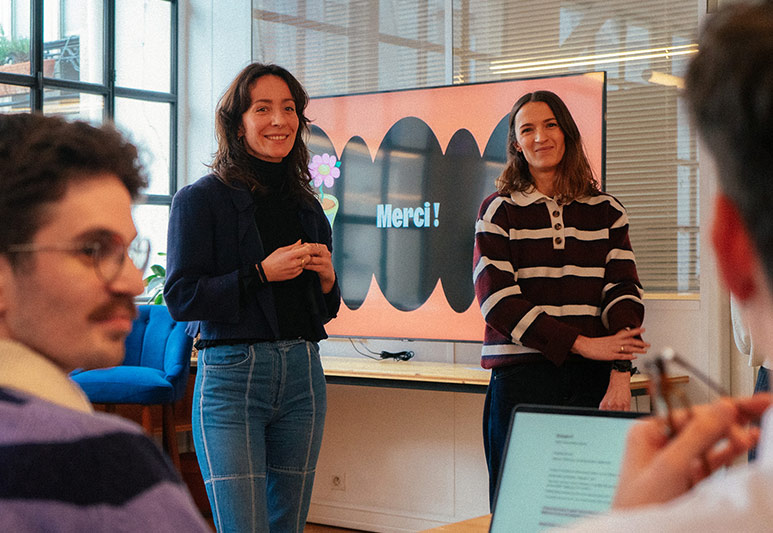
The final concept was presented to the Deezer team, bringing together research, iteration, and product vision.

The Deezer team found the proposed direction relevant and aligned with the research insights.

They confirmed a key technical constraint: imported libraries do not include listening timestamps, meaning tracks played yesterday or two years ago are treated equally, potentially biasing the generated musical profile.

This limitation reinforced our intention to explore collaborative calibration as a next step, allowing users to refine and rebalance their generated identity over time.
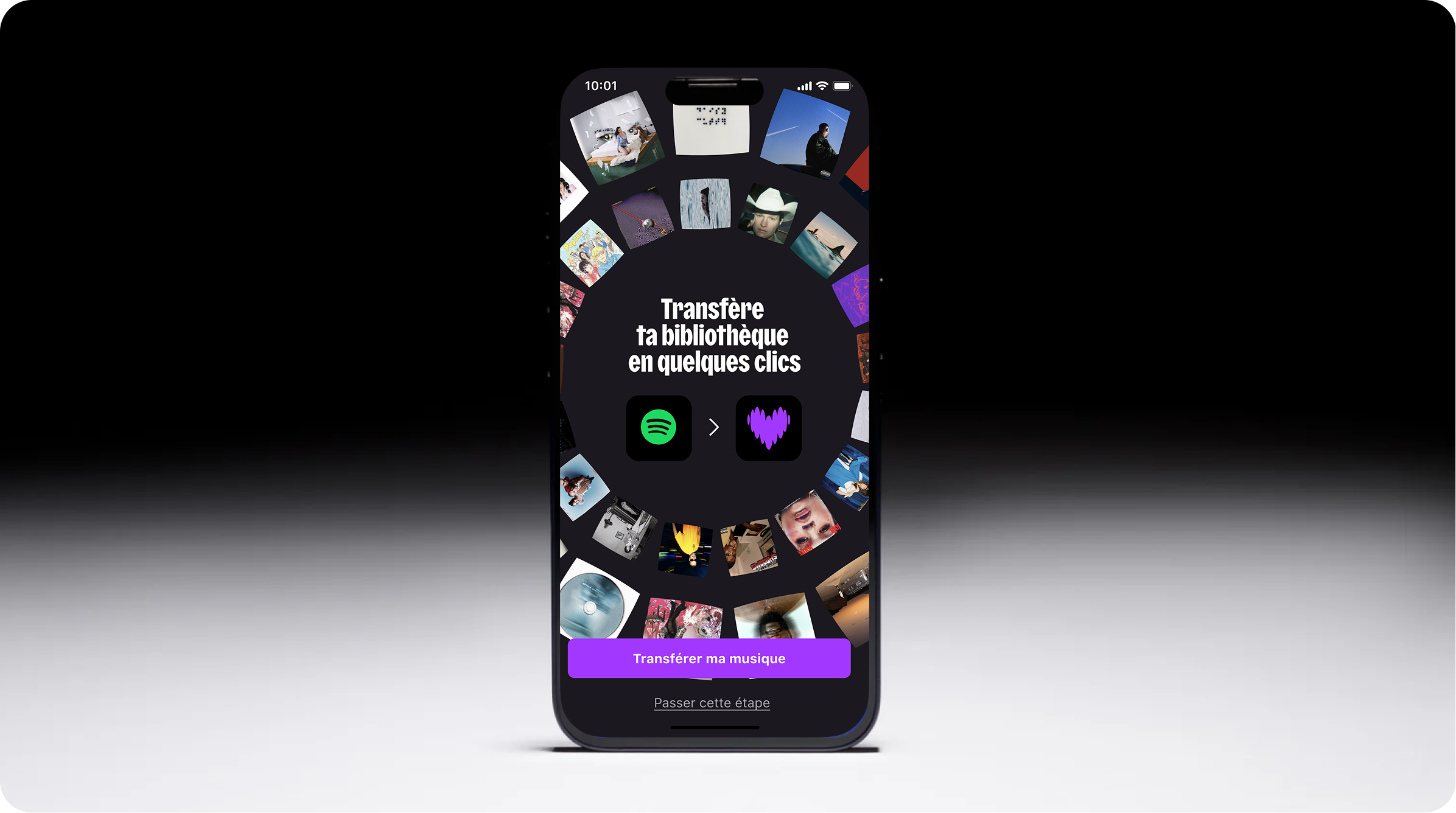

Final presentation 1
Final presentation 2
Final presentation 3
09

Next Steps

Move from automatic detection to collaborative calibration. By making musical identity adjustable from the start, users can refine their profile, optimize recommendation relevance, and develop a true sense of ownership.